The Solution to the Lost Pacifier: Why Queebi's Pacibuddy is a Must-Have

Every parent knows the scene: it's 3 AM, the baby is crying, and the pacifier has vanished into the dark depths of the crib. The constant search for a dropped or misplaced pacifier is one of the small but immense frustrations of early parenthood.

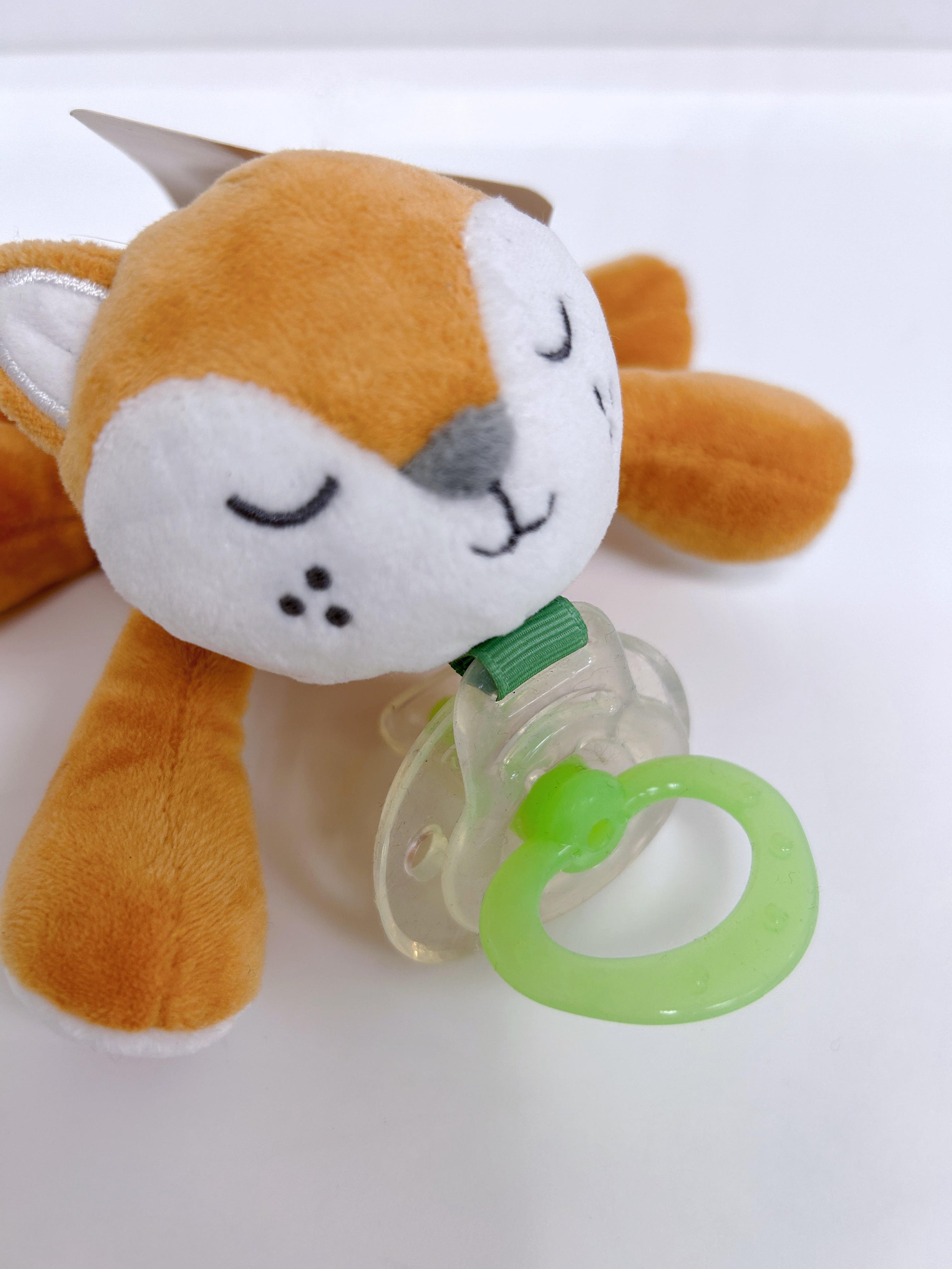
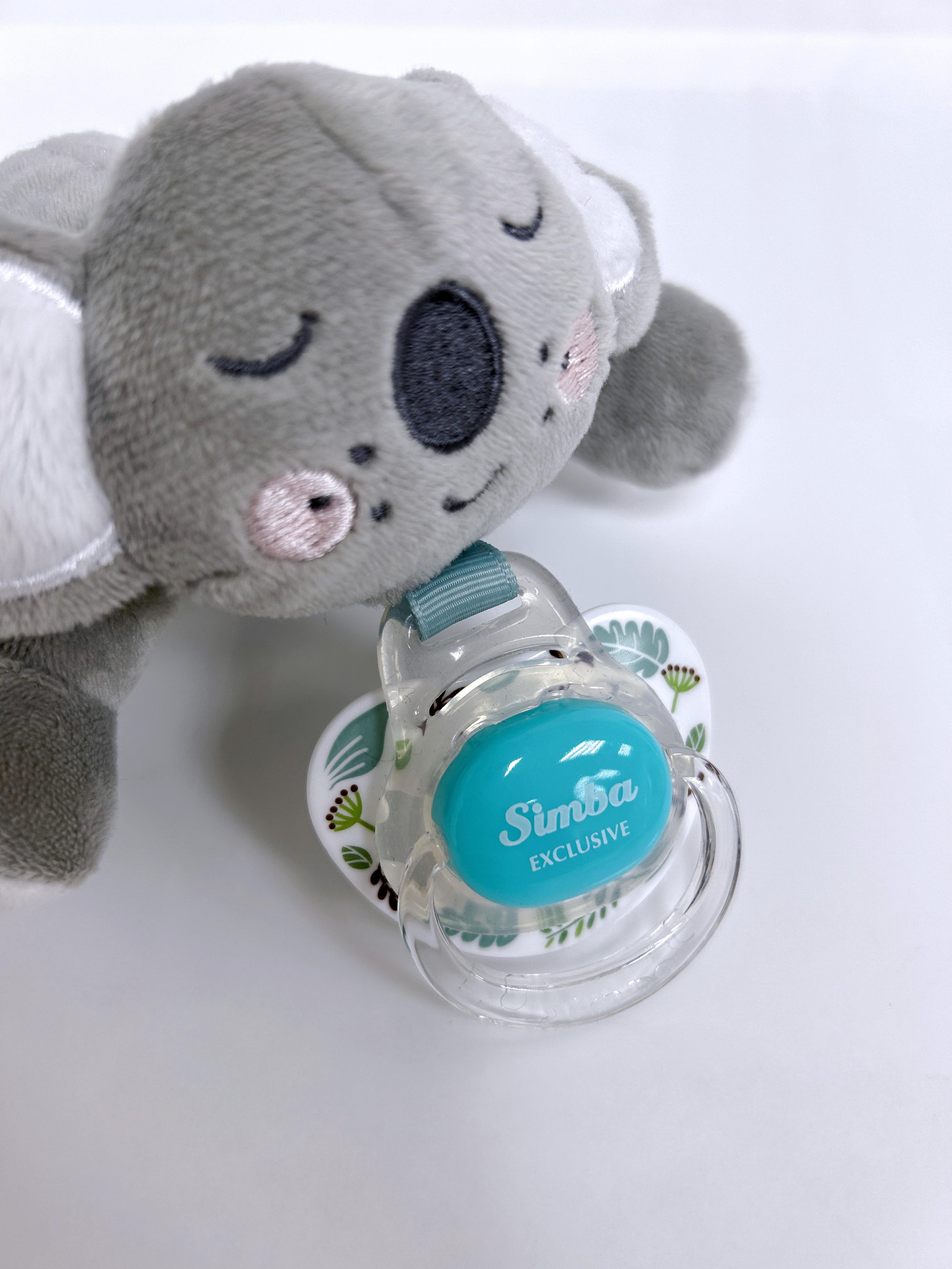
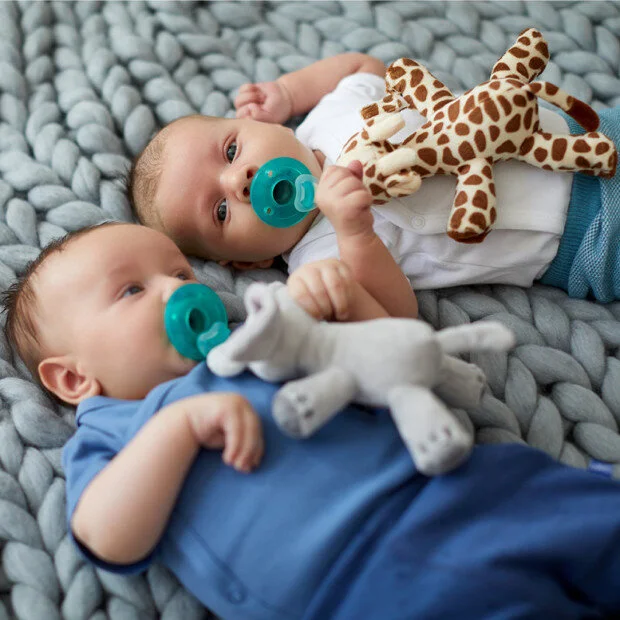
This is the exact problem that Wendy, a mother of two pacifier-loving babies and the founder of Queebi, set out to solve. She embarked on a creative adventure to develop the ultimate universal plush pacifier holder. The result is the Queebi Pacibuddy—a product designed not just to be cute, but to be a genuine problem-solver.

If you're a retailer wondering if this is the right product for your collection, the answer is simple: Queebi solves a universal problem, making it a perennial bestseller.

Why Queebi? The 5 Key Benefits

1. The Universal Solution (This is the Game-Changer)

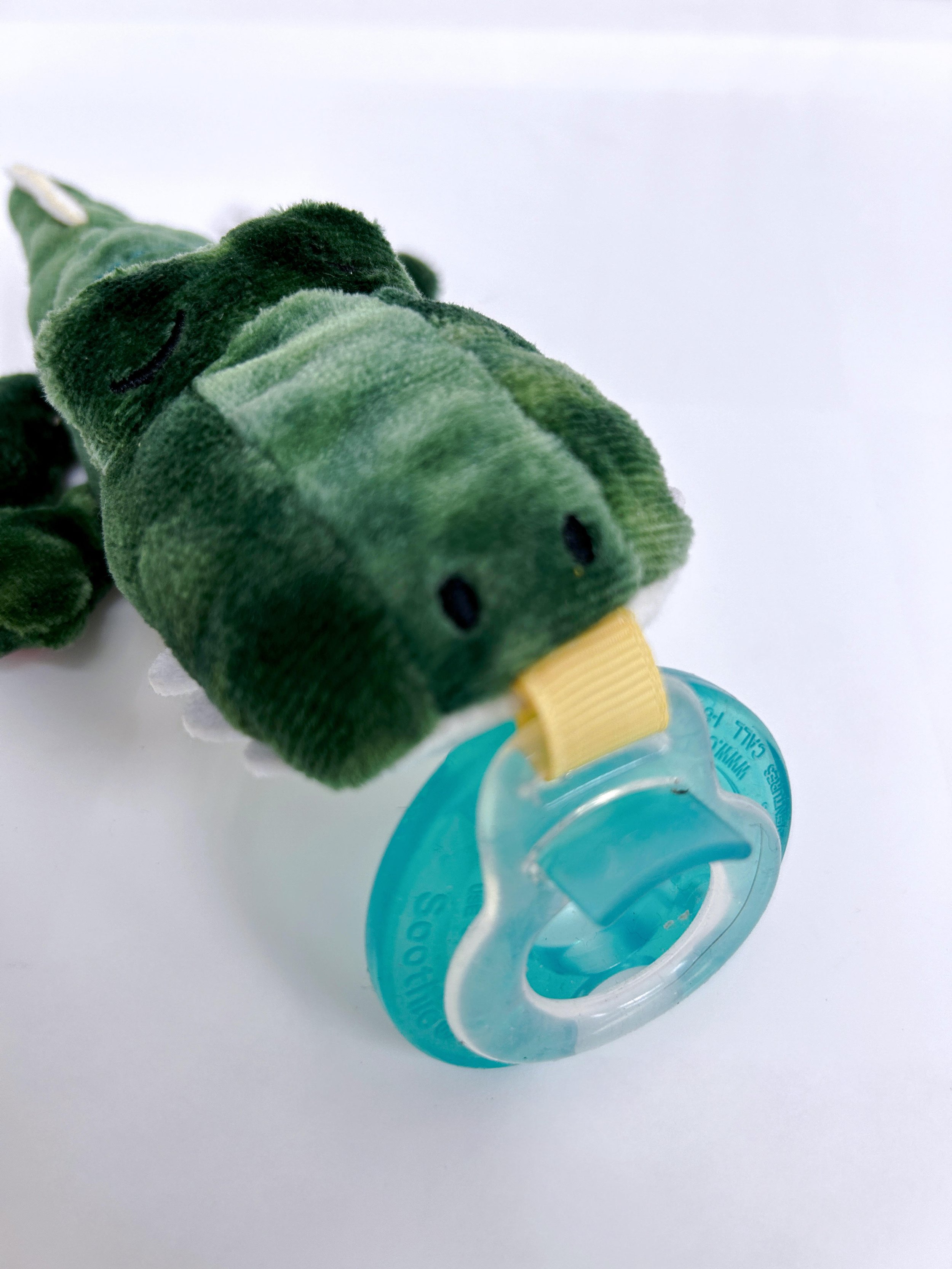
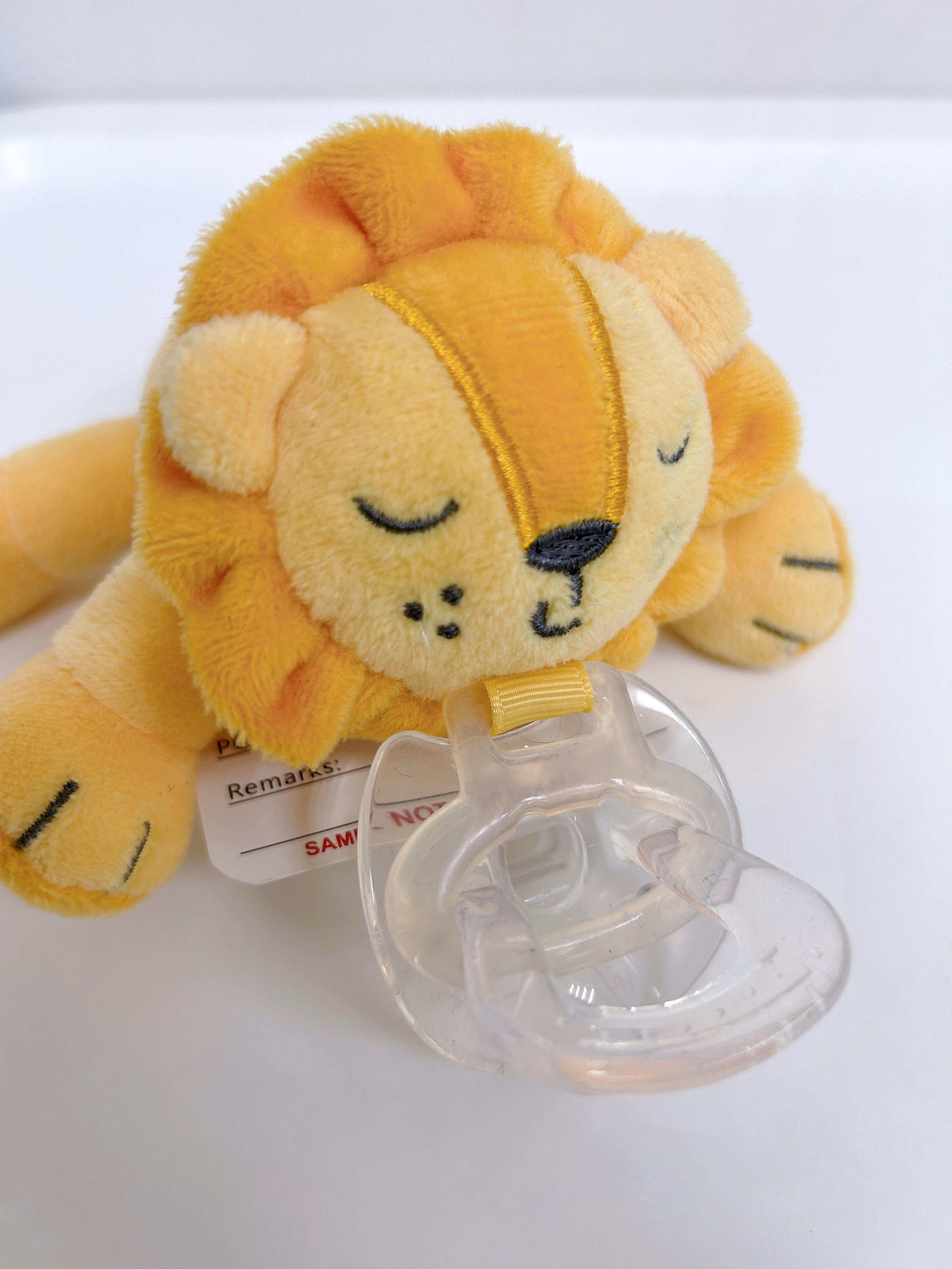
The genius of the Queebi Pacibuddy is its patented silicone ring. It was intentionally designed to be compatible with the widest possible variety of name-brand pacifiers, including MAM™, Avent™, NUK™, Nuby™, and Soothie™. This removes the guesswork for parents and makes it an easy product for retailers to recommend, as it works with whatever pacifier a baby already prefers.

2. Easy to Find, Hard to Lose

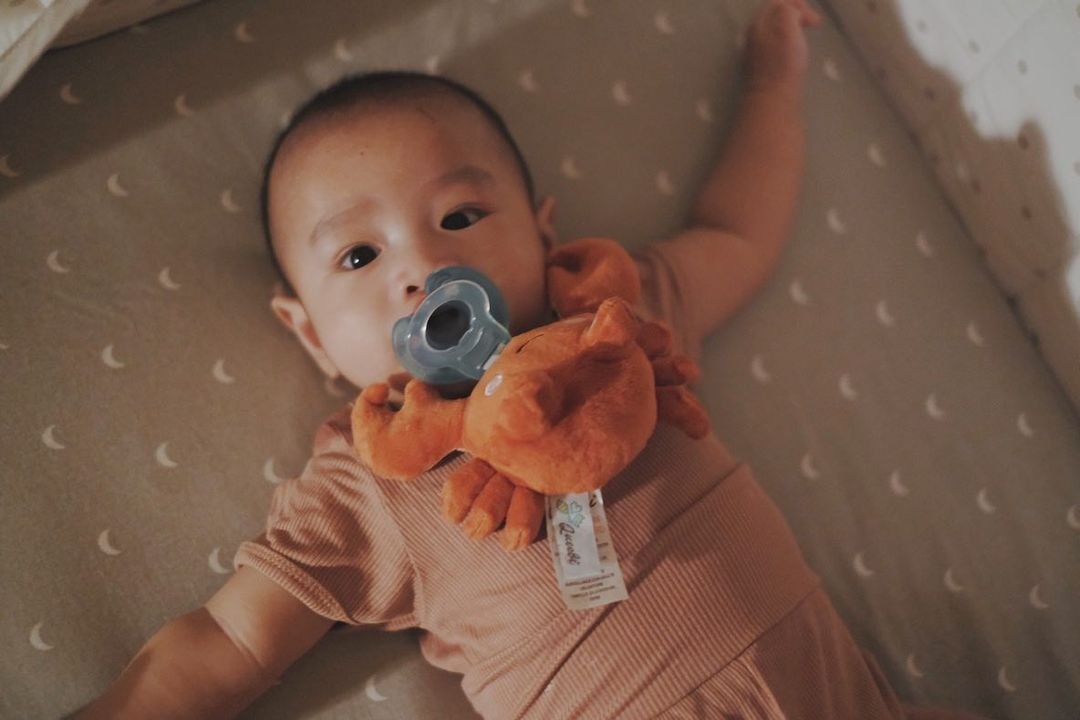
The Pacibuddy's plush animal character makes the pacifier highly visible and easy for parents to find. More importantly, it gives the baby something soft and substantial to hold onto, helping them to find and replace their own pacifier, which is a crucial step toward self-soothing. No more lost pacifiers!

3. Supports Healthy Development

The Pacibuddy is more than a holder; it's a developmental toy.

  • Motor Skills: The plush body encourages the baby to practice their grasp and develop hand-eye coordination.

  • Sensory Development: The soft, cuddly texture provides tactile stimulation, engaging the baby's sense of touch.

4. Promotes Safety, Comfort, and Hygiene

Babies have a natural urge to suck, which is why pacifiers are so comforting. The Pacibuddy ensures a pacifier is always nearby to keep a baby calm, help them fall asleep faster, and provide comfort on the go. Better yet, it's easier to keep the Pacibuddy clean than a baby's hands or other random toys they might put in their mouth. All Pacibuddy characters are machine washable and made from BPA and Phthalate-free materials.

5. Reduces the Risk of SIDS

This is a critical benefit. The American Academy of Pediatrics has shown that babies who use pacifiers have a significantly lower risk of SIDS. The Pacibuddy helps by ensuring the pacifier is always safely within reach during naptime and bedtime.
How the Universal Ring Works

Queebi's innovative design is brilliantly simple:

  • For Pacifiers with a Button Knob (like MAM™ or NUK™): Simply stretch the silicone ring over the pacifier handle and onto the button knob for a secure fit.

  • For Pacifiers with a Tab Handle (like Soothie™): Locate the rectangular "Soothie-Slot" on the silicone ring and insert the pacifier's tab through the slot.

By solving a real parent problem with a safe, versatile, and high-quality design, Queebi has created a product that offers peace of mind to parents and delivers consistent sales for retailers. It's a true must-have.
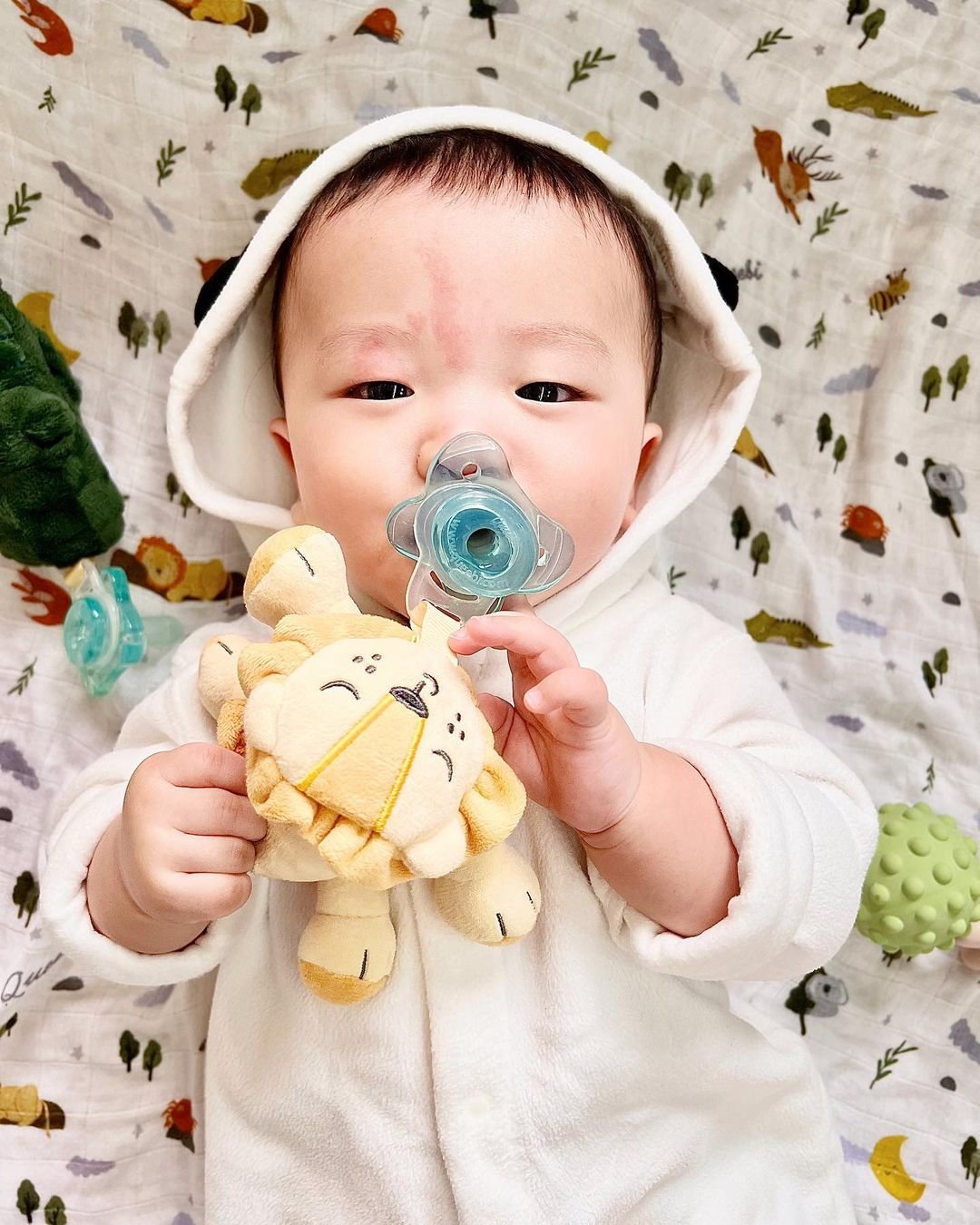
Universal plush pacifier holder with that could be used with a wide variety of name brand infant pacifiers.

Our Queebi baby users from all over Asia, such as Taiwan, Indonesia, Vietnam, Japan, China and Korea.

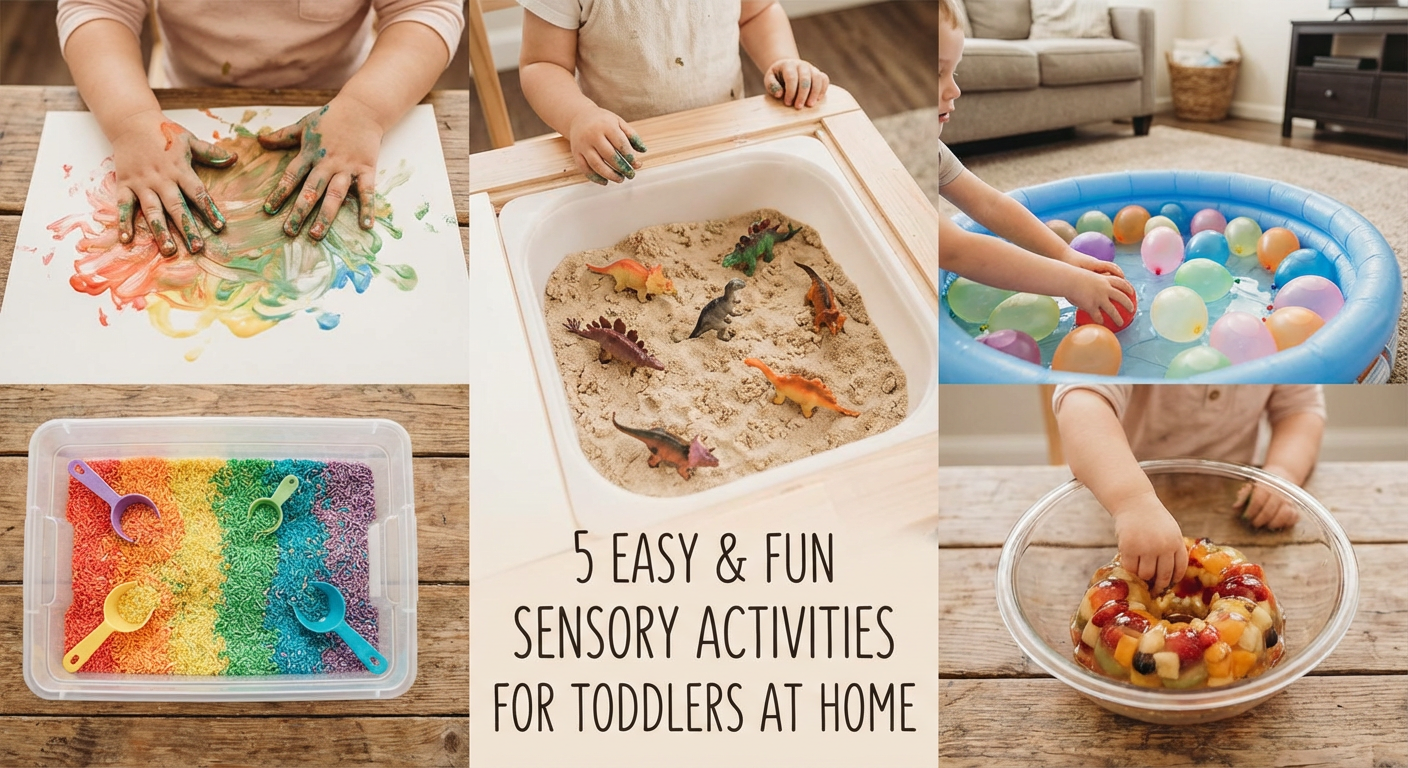
5 Easy and Fun Sensory Activities for Toddlers at Home

Editor's Note:

This article was originally written to help families during the global pandemic. We have updated it to be a timeless resource for any parent looking for fun, screen-free ways to keep their children engaged at home, whether it's a rainy day, a school holiday, or just a quiet afternoon.


How do we keep our young children busy, learning, and happy at home, especially when there isn't much space to run around? The answer is sensory play! One fun activity per day can keep the stress away and create wonderful bonding moments.

Did you know that when a child uses two or more senses at the same time, their brain works more optimally to absorb and store new information? That's why experts agree that multi-sensory activities are a more productive and beneficial alternative to screen time.

The best part? All of the following activities can be done with simple materials you likely already have at home.

5 Multi-Sensory Activities for Children Under 3

1. Edible Finger Painting

This is often a child's first art project and a perfect multi-sensory activity. It introduces textures, colors, and even tastes! Because younger children love to put everything in their mouths, it's best to DIY an edible paint that is completely safe.

How to make it: Simply mix cornstarch with water until you have a smooth consistency, then divide it into a few cups and add a different drop of food coloring to each. Voila! You have a safe, vibrant paint ready for little hands to explore.

2. "Dinosaur Dig" Treasure Hunt

This activity is perfect for introducing letters and concepts while playing. Fill a bucket or storage container with clean sand, uncooked rice, or dried pasta. Hide some small dinosaur toys within the sand. For an extra learning step, you can stick letters on them (e.g., the letter 'D') and have your child group them as they find them. This simple game teaches texture, discovery, and early literacy skills.

3. Water Balloon Bath

Make bath time even more fun and educational! Fill several colored balloons with water. In the tub, your child can explore the balloons, introducing a rich vocabulary of descriptive words: slippery, smooth, heavy, light, squishy. This turns a routine activity into a fun sensory lesson.

4. Creative Play with Rice

Rice is a fantastic and inexpensive alternative to sand for sensory bins. To make it even more exciting, you can color it by shaking a cup of rice with a few drops of food coloring and a teaspoon of vinegar (the vinegar smell will disappear as it dries).

You can use your colorful rice for all kinds of activities:

  • Bury "treasure" like small toys or blocks for a treasure hunt.

  • Pour it into clear plastic bottles to make colorful shakers.

  • Simply let your child run their hands through it to enjoy the texture and sound.

5. Jello Dig

This activity turns snack time into a productive and exciting sensory experience. Simply make a batch of gelatin (Jello) as usual, but before it sets, add large pieces of fruit (like mandarin orange segments or berries) or other edible, baby-safe objects. Your child will love digging through the jiggly, cool texture to find the treats inside. It stimulates all their senses and fills their tummy at the same time!

6. Explore with Open-Ended Sensory Toys

Not all sensory play has to be a messy DIY project! Some of the world's best toys are specifically designed to engage a child's senses in an open-ended way.

  • For pure sensory exploration, nothing beats the Swiss-designed toys from MOLUK. Their products are made from high-quality, food-grade silicone with unique, tactile shapes. They can be spinning tops, bath toys, or stackable objects, encouraging play that is driven by a child's own curiosity.

  • For a different kind of tactile building, the flexible magnetic pieces from Clixo click and bend in satisfying ways, merging the art of origami with construction.

  • The simple, single-shape design of Plus-Plus provides a wonderfully tactile experience as children connect the pieces to create 2D mosaics or 3D structures.

It turns out it's not difficult to create multi-sensory activities at home. While they might get a little messy, the developmental benefits and the joyful memories you create are absolutely worth it.

5 Screen-Free Activities for Creative Family Fun at Home

Editor's Note:

This article was originally inspired by families spending more time at home during the global pandemic. We have since updated it to be a timeless guide for any day you're looking for fun, screen-free ways to connect as a family, be it a rainy weekend, a school holiday, or just a quiet afternoon.


In a world full of screens, creating moments for hands-on, imaginative play is more important than ever. It's easy to turn on the TV, but when you need to keep your children engaged and prevent crankiness, nothing beats a creative activity. Taking the time to play together isn't just about passing time; it's an opportunity for family bonding and powerful developmental learning.

Here are 5 of our favorite screen-free activities to spark creativity at home.

Activity 1: The Magic of Building Blocks

Open-ended building toys are a must-have. They can be played with for hours with just a little imagination, becoming houses, towers, bridges, or cars. The benefits are immense:

  • Developing imagination and storytelling skills.

  • Practicing patience and problem-solving.

  • Building self-confidence with every successful creation.

  • Learning concepts of shape, size, balance, and color.

Recommended Toys:

  • Plus-Plus: This brilliantly simple, single-shape piece is like a physical pixel. It's perfect for creating both 2D mosaics and intricate 3D structures, helping children develop fine motor skills and spatial reasoning. (www.plus-plus.com)

  • MOLUK: These are the ultimate open-ended toys. With no defined purpose, a MOLUK toy could be a spinning top, a mountain for a car, or a hat for a doll. They force kids to be creative and think abstractly. (www.moluk.com)

Activity 2: Popsicle Stick Color Matching

This simple DIY game is incredibly valuable and costs next to nothing. All you need are some craft sticks and colored markers or paper.

Create "popsicles" out of colored paper and cut a slit in the top. Color the end of each craft stick to match one of the paper popsicles. Have your toddler choose a stick, identify the color, and then "insert" it into the matching paper popsicle. It's a fun, hands-on way to practice color recognition and fine motor skills. Pretend licking of the finished popsicle is highly encouraged!

Activity 3: Scissor Skills Cutting Practice

This activity provides a safe, controlled environment for your toddler to practice the important skill of cutting.

On a piece of paper, draw simple shapes or lines (straight, zig-zag, wavy). Give your child a pair of child-safe scissors and let them practice cutting along the lines. They may need help holding the paper or opening and closing the scissors at first, but try to let them do as much as they can on their own. It’s a fantastic way to build hand strength and coordination.

Activity 4: Host a Fashion Show

Many children love to express themselves through dress-up. Turn this into an event! Let them experiment with their clothes and accessories to create unique outfits. You can help with face paint or a touch of kid-friendly makeup.

Then, create a "catwalk" in your living room, dim the lights, and play some upbeat music to make it feel like a real show. For an extra layer of creativity, use cardboard and Makedo tools to build a custom runway, cool props, or even wearable accessories!

Activity 5: Build an Epic Fort

The classic blanket fort is a childhood rite of passage for a reason! Drape bed linens over chairs, couches, and tables to create a cozy, temporary playhouse.

To take your fort-building to the next level, introduce a toolset specifically designed for cardboard construction, like Makedo. Using the kid-safe saws and connectors, you and your child can use recycled cardboard boxes to engineer incredible, life-sized structures—from castles and tunnels to spaceships and storefronts. It teaches real construction principles and turns imagination into a tangible creation they can actually play inside. (www.make.do)

It turns out that preparing fun, educational activities for your children doesn't have to be expensive or complicated. We hope these ideas inspire many happy hours of family fun. Good luck

The Best Bibs for Baby-Led Weaning: A Buyer's Guide for Messy Eaters

Editor's Note:

This article was originally a review of a specific bib we once carried. We've updated it to be a comprehensive guide on the features that make a full-coverage bib a must-have for messy eaters. The insights are based on real-world experience to help you choose the best option for your family.


Baby-Led Weaning (BLW) is an amazing way to introduce solid foods. It has so many positive benefits for a child's development. However, there's no denying the biggest con: it can be incredibly messy and frustrating to clean up after every meal.

A great bib (and floor mat!) can be a game-changer. It will help you feel so much happier and more relaxed during your baby's BLW journey. When you aren't constantly stressing about the mess, you can truly enjoy the experience of eating with your baby.

For maximum protection, a full-coverage, all-over bib is the best solution. Here is what you should look for when choosing one.

The Ultimate Checklist for a Full-Coverage Bib

The Good: Key Features to Look For

  • Generous Size and Coverage: Look for an oversized bib that covers not just your baby's chest, but their lap as well. The best designs have an elastic hem that can be stretched around the high chair tray, creating a "catch-all" zone that contains all the mess.

  • Lightweight and Portable: The fabric should be lightweight and easy to roll up for storage in a diaper bag, making it perfect for meals on the go.

  • Easy to Clean: This is non-negotiable. The bib must be machine washable for deep cleans and have a smooth surface that is easy to wipe down for quick clean-ups between meals. Always ensure you hang it to dry completely before storing.

  • Safe and Waterproof Materials: Safety is paramount. Ensure the bib is certified BPA-free, PVC-free, and phthalate-free. Look for a 100% polyester fabric with a TPU coating for waterproofing. This will keep your baby's clothes completely dry from drool and spills.

  • Comfortable Design: Look for stretchy neck and arm holes that are comfortable for your baby. Consider the sleeve length based on your climate; short sleeves are fantastic for warmer weather to prevent overheating, while long sleeves offer maximum coverage for especially messy meals.

  • Versatility: A great bib can often double as a smock for messy art and craft projects!

The Final Verdict

For parents embracing the fun (and chaos) of Baby-Led Weaning, a full-coverage bib isn't a luxury—it's an essential tool. It dramatically reduces laundry, minimizes clean-up time, and lowers the stress level of mealtimes. By investing in a high-quality bib with these features, you're not just buying a piece of fabric; you're buying yourself more joy and peace of mind during one of your baby's most important developmental stages.

Screen Shot 2019-10-16 at 11.58.09 AM.png
Screen Shot 2019-10-16 at 11.58.20 AM.png
Screen Shot 2019-10-16 at 11.59.25 AM.png

A Parent's Guide to Self-Feeding: Why It's Worth the Mess

As a new parent, your instinct is to be protective. You worry about choking, so you might prefer to feed your child yourself. While every parent has a different perspective, let's discuss the incredible importance of allowing children to be in charge of their own feeding and learn how to listen to their bodies.

This approach, often called Baby-Led Weaning (BLW), can be messy. But this article will show you why you should empower your little one to self-feed—and why it is absolutely worth the mess.

Why is Self-Feeding Worth the Mess?

Learning to eat alone is a critical skill that should be encouraged early. When a child is able to grasp something, letting them explore food with their hands stimulates their development in profound ways.

  • Develops Fine Motor Skills: The act of learning to grab food and put it in their mouths strengthens the small muscles in their hands and fingers. This is the same dexterity they will later use for other positive activities like coloring, drawing, and writing. The more they practice, the stronger those muscles become.

  • Improves Hand-Eye Coordination: Self-feeding requires your baby to see their food, use their hands to pick it up, and guide it successfully to their mouth. This is a complex task that builds crucial coordination.

  • Encourages a Healthy Relationship with Food: Allowing a baby to control their own intake helps them learn to listen to their body's hunger and fullness cues. It gives them a sense of autonomy and can lead to them being more adventurous eaters in the long run.

When is a Good Age to Start Self-Feeding?

Once you introduce solid foods (around 6 months), your child will likely start showing signs of wanting to feed themselves. When your child is able to sit up unassisted and can successfully pick up food and get it into their mouth, it's the right time to begin the transition.

Self-feeding involves lots of feeling, squeezing, and dropping food. It might seem chaotic, but it’s one of the primary ways your child develops essential skills.

How to Start Your Baby's Self-Feeding Journey

Step 1: Start with Hands and Finger Foods

Baby-Led Weaning encourages letting your child explore food with all their senses. Start by offering soft, bite-sized pieces of food that are easy for your baby to pick up and mash between their gums. Think small pieces of soft fruit like banana or avocado, or soft-cooked vegetables like potatoes or pumpkin.

At this stage (around 6 months), finger foods are for exploration, not their main source of nutrition, so you should continue breastfeeding or formula feeding as usual. You'll find that once they become interested in the textures and tastes of food, the journey to self-feeding becomes much easier.

Step 2: Introducing the Right Kind of Utensils

There's no right or wrong time to introduce utensils, but it's the next logical step in their development. The key is to use utensils that are actually made for a baby's hands and abilities.

Traditional children's cutlery often looks like adult cutlery, just scaled down. The problem? A "child-size" spoon is often the same length as a 12-month-old's entire forearm! This forces them to hold it in an awkward fist grip, which doesn't help develop the fine motor skills they need.

What to Look for in a Starter Spoon and Fork:

Instead of focusing on a brand, focus on these revolutionary design features endorsed by Occupational Therapists:

  • A Short, Ergonomic Handle: This is the most important feature. A short, wide handle encourages a child's natural vertical grasp, allowing them to hold the utensil properly and bring it to their mouth much more easily.

  • A Choke-Protection Shield: Many of the best starter utensils have a built-in safety shield below the spoon or fork tines. This prevents your baby from accidentally gagging themselves, giving you invaluable peace of mind.

  • Proportional Sizing: The utensil should be sized for a baby's body, not just a smaller version of an adult's.

A Final Word on the Mess

Messy eating and playing with food are normal, healthy parts of your baby’s development. It's also normal for them to drop or throw food. If you react strongly, they might think it's an exciting new game. The best strategy is to ignore it. Calmly pick up the food without a fuss, or simply leave it on the floor until the meal is over so you only have one big clean-up.

Needless to say, teaching children self-feeding is often a long and messy journey. Just let the food fly!!
— The Real Nutritionist

A Parent's Guide to Building Blocks by Age: The Benefits of Block Play

Editor's Note:

As part of our commitment to providing timeless, valuable advice, this popular article has been updated to be a general guide on choosing age-appropriate building blocks. The specific brand examples have been replaced with descriptions of the types of blocks that best serve each developmental stage.

To explore our current collection of high-quality, creative building toys from our trusted brand partners, please click here.


Building blocks have been a childhood staple for decades, and for good reason. Building with blocks provides one of the most valuable learning experiences available for young children. Block play stimulates learning in all domains of development—intellectual, physical, and social-emotional—and, most importantly, allows a child's imagination to run free.

Researchers have even shown that children who play with blocks when they are three, four, and five years of age tend to perform better in math, especially Algebra, later in middle school.

Building Blocks for Kids at Different Ages

With so many types of baby blocks on the market, how do you know which kind is right for your child? Not all blocks will work for all age groups. There is a natural progression to block play, and introducing them at each stage is invaluable for development.

Blocks Play for Babies (3 to 12 months old)

When babies are first introduced to blocks, the play is all about sensory exploration. They are learning how to hold them, feeling their texture, and are attracted by their eye-catching colors. They will carry them around, bang them together to see what sound they make, and, of course, put them in their mouths. This simple play expands a young child’s expressive and receptive language as they learn new words and concepts.

Recommended Blocks for this Age: Soft Silicone Blocks
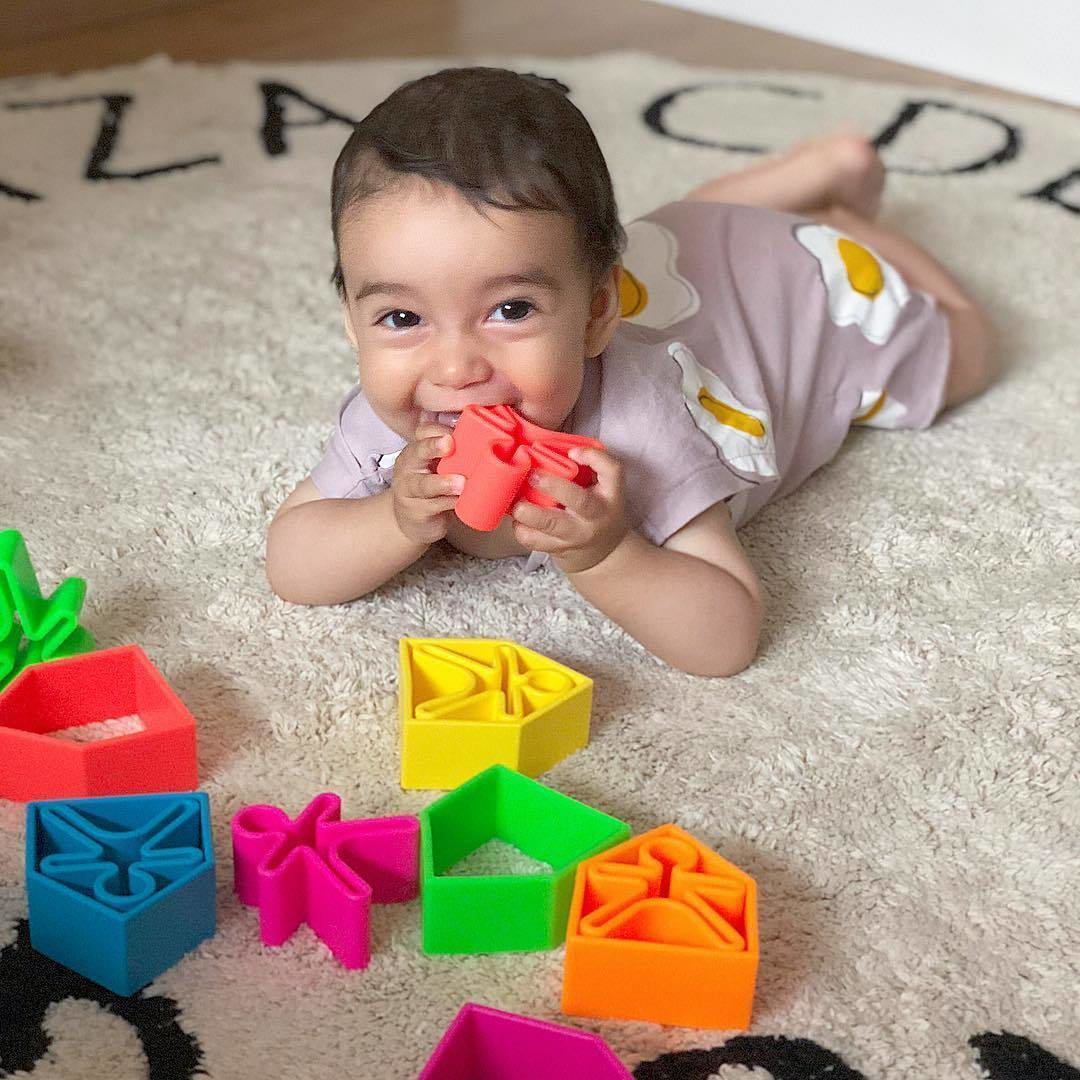
For this stage, choose blocks made from soft, food-grade silicone. These are perfect because they can double as a teether, which is great for itchy gums. This also helps the child learn the crucial hand-to-mouth movement needed for self-feeding. The different colors encourage visual stimulation and color recognition, making them an ideal first toy for all-around development.

Blocks Play for Toddlers (2 to 3 years old)

At this age, the aim of play shifts to developing the mind: to imagine, visualize, explore, and create. A two or three-year-old is beginning to engage in early pretend play and is learning concepts like sorting, ordering, counting, size, and shape.

Recommended Blocks for this Age: Large, Lightweight Interlocking Blocks
Look for blocks made from soft but sturdy foam or plastic. They should be lightweight enough for a toddler to handle easily but firm enough that their creations don't tumble over too often, which can cause frustration. Colorful visuals and a comfortable touch are key. These blocks should be durable, easy to clean, and safe, allowing kids to have fun while stimulating creativity and imagination.

Blocks Play for Preschoolers (4 to 5 years old)

By four and five, children's block play becomes more experienced, balanced, and organized. Constructive play is more open-ended and exploratory. Children begin to combine different structures to make more complex buildings, telling stories through their creations.

Recommended Blocks for this Age: Smaller, Complex Construction Sets
Introduce smaller, more intricate interlocking blocks. These types of sets emphasize how a single, simple shape can be used to create an infinite variety of things. They are perfect for teaching children how to translate a flat, 2D design into a 3D structure. This challenges their fine motor skills, encourages problem-solving, and takes their creativity to the next level.

50015893_370619580417705_5606032701099285469_n.jpg
Play is the highest form of research.
— Albert Einstein

Baby Teething 101: A Parent's Guide to Teethers, Symptoms & Pain Relief

Teething can be one of the least fun parts of early development. Symptoms vary widely, but for many babies, it can mean lost sleep, crying in pain, and rashes from constant drooling. As a parent, you'll naturally start thinking about giving your baby a teether. But this brings up a lot of questions: When is the right time? Does my baby really need one? And with so many options, what kind of teether should I choose?

This guide will walk you through everything you need to know.

Does My Baby Really Need a Teether?

While some lucky babies seem to sail through teething without much fuss, for most, growing teeth causes pain and discomfort. You may notice your baby crying more, producing a lot more saliva, and acting nervous or fussy, especially at night.

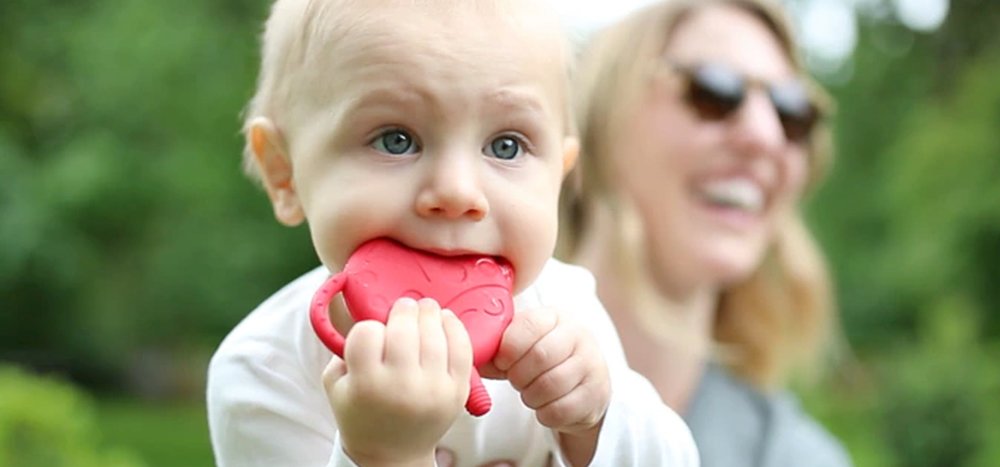
This is where teething toys become beneficial. Not only do they help relieve a baby’s pain by providing a safe, satisfying surface to chew on, but they also support cognitive development. The simple act of using a teether helps a baby practice crucial motor skills: they must see the toy, coordinate their hands to grab it, and guide it into their mouth.

When Should I Give My Baby a Teether?

If you notice your little one trying to chew on everything in sight—their hands, your shirt, the remote—it's probably time to introduce a teether.

Teething can start as early as 3 months old or as late as 14 months. The exact timing and which teeth appear first often depend on family history and genetics. Typically, the two lower front teeth are the first to emerge, followed by the two upper front teeth. Most children will have their full set of 20 primary teeth before they turn 3 years old.

How to Choose the Perfect Teether for Your Baby

A good quality teething toy should be durable, BPA-free, easy for your baby to hold, and safe to chew on, with no hard or sharp edges. Instead of thinking in "stages," it's more helpful to think about the teether's material, shape, and function.

1. Materials Matter

  • Silicone: This is the most popular choice for a reason. 100% food-grade or medical-grade silicone is soft, flexible, durable, and free from harmful chemicals. It's also easy to clean and can often be chilled for extra relief.

  • Natural Rubber: Made from the sap of rubber trees, this is another excellent, non-toxic option. It has a natural elasticity and softness that babies love.

  • Wood: Unfinished, smoothly sanded wood (like maple) is a great natural, non-toxic, and naturally antimicrobial option.

2. Shape and Function

  • Rings and Simple Shapes: These are classic for a reason. They are easy for the youngest babies to grasp and maneuver into their mouths.

  • Ergonomic Handled Teethers: Many modern teethers have fun shapes with built-in handles, making them incredibly easy for little hands to hold securely. This helps babies build independence.

  • Teethers with Bristles: Some teethers have soft silicone bristles that act as a gum massager and a gentle introduction to the sensation of a toothbrush.

  • Teethers that can be Chilled: Any solid silicone teether is safe to put in the refrigerator (never the freezer, as it can get too hard and damage gums) for cooling relief on inflamed gums.

3. Hygiene and Convenience

  • Look for teethers that are easy to clean (dishwasher-safe is a huge plus!).

  • Consider teethers that come with a travel case or have a "flip" design to keep the chewing surfaces clean inside a diaper bag.

  • A teether that can attach to a pacifier clip is a lifesaver for preventing it from constantly falling on the floor.

Safety First: A Non-Negotiable Rule

Always supervise a baby while they are using a teether. When choosing one, make sure it is large enough that they cannot fit the entire thing in their mouth.

Crucially, do not use items that are not meant to be teethers. Toys with small parts that could fall off are a serious choking hazard. Never use teething necklaces or amber beads, as they pose a risk of strangulation and choking. Stick to products specifically designed and safety-tested for teething. And don’t forget to regularly inspect and clean your baby’s teethers!

The Ultimate Guide to Choosing a Teether for Teething Pain Relief

Editor's Note:

Please be aware that BabyLux no longer distributes Matchstick Monkey products. This popular article has been updated to serve as a definitive guide on what to look for when choosing the most effective teether to soothe your baby's teething pain.


When your baby is suffering from teething pain, you'll do anything to find a solution. Many of the best and most innovative baby products are born from a parent's direct experience—a mom or dad who couldn't find the perfect tool and decided to create it themselves. This is especially true in the world of teethers.

With so many choices on the market, it can be overwhelming for parents to decide which product is best. While all teethers are designed to soothe sore gums, they come with different features. This guide will help you understand what to look for to find the perfect solution for your little one.

The Ultimate Teether Checklist: What to Look For

To find a teether that is both effective and loved by your baby, look for these key features.

1. Ergonomic Design for Little Hands

A teether should be easy for a baby to hold and manipulate. Look for ergonomically designed products that are lightweight and have handles or shapes perfectly suited for tiny hands. This helps your baby develop motor skills while empowering them to soothe themselves.

2. Doubles as a Teething Gel Applicator

This is a game-changing feature. Some of the most innovative teethers have small, soft bumps on the back of their fun shapes. These bumps are not only great for providing a satisfying texture to chew on, but they are also perfectly designed to hold a small amount of teething gel or granules. This allows you to administer teething medication accurately and painlessly, getting it right to the source of the pain without getting your fingers bitten.

3. Advanced Hygienic Properties

In today's world, hygiene is more important than ever. Look for teethers made from food-grade silicone that incorporates antimicrobial technology. This helps keep the teether hygienically cleaner between washes, inhibiting the growth of microbes and giving parents extra peace of mind.

4. Engaging and Fun Sensory Design

A teether should appeal to your child! Deep colors, satisfying shapes, and playful expressions are all designed to engage your baby's senses. A fun, "Instagrammable" design that looks cute with every outfit is a wonderful bonus that makes a practical item feel special.

How Do I Safely Clean a Silicone Teether?

Proper cleaning is essential. The best teethers are designed to be incredibly easy to clean. For any teether made of 100% FDA-approved, food-grade silicone, you should be able to:

  • Wash it with simple soap and hot water.

  • Place it in the top rack of the dishwasher.

  • Sanitize it in a steam or cold water sterilizer.

Always ensure the teether is BPA-free and made from non-toxic, environmentally friendly materials.

230318_jacobmcfadden_originalteether_lowres_009.jpg

A Parent's Guide to Safe & Stylish Teethers: Why Silicone is Best

Editor's Note:

Please be aware that BabyLux no longer distributes Loulou LOLLIPOP products. We have updated this article to serve as a comprehensive guide on selecting safe, effective, and stylish teething accessories for your baby.


Modern baby goods are being redefined by a new standard: the pursuit of better, cuter, and safer products for every newborn adventure. When it comes to teething, this means a new generation of teethers and pacifier clips that are as stylish and fun as they are safe and soothing.

Gone are the days of boring teething rings. The industry has evolved, with parent-led innovation creating adorable, "chewable" designs that look as good as they feel on a baby's sore gums. The first of their kind were strong, durable, and delightful, shaped like tasty treats such as donuts and ice cream cones, proving that teething accessories could be both effective and incredibly cute.

What Makes a Teether 100% Safe for Your Baby?

When your little one is putting something in their mouth, safety is the number one priority. A truly safe teether is one that is completely free from nasty chemicals. Here is what you should always check for on the product label:

  • 100% Food Grade Silicone: This is the gold standard for teething products. It is non-toxic, durable, and soft on gums.

  • Free from Harmful Chemicals: Ensure the product is explicitly listed as BPA-free, Phthalate-free, Lead-free, Cadmium-free, and PVC-FREE.

  • Original, Safe Designs: Look for products from reputable brands that focus on creating safe, modern designs for babies.

A great tip for extra relief is that many silicone teethers can be chilled in the refrigerator (never the freezer!) to provide cool comfort for teething pain.

How to Properly Clean Silicone Teethers and Pacifier Clips

Silicone is a naturally antimicrobial material, which makes cleaning simple and effective. However, there are important rules to follow to ensure the product's integrity, especially for items with clips or multiple parts.

  • DO wash thoroughly. Before the first use and after each subsequent use, wash with warm, soapy water. This is sufficient to clean the teether or clip.

  • DO NOT sterilize or boil your pacifier clip. The high heat can damage the metal or plastic clip mechanism, making it unsafe.

  • DO NOT microwave your clip for the same reason; it can compromise the clip's components.

The Must-Have Accessory: The Pacifier Clip

A good pacifier clip is one of the most useful accessories for parents on the go. These clips attach securely to clothes, blankets, strollers, or car seats to hold pacifiers, teething rings, or small toys. They are perfect for keeping your baby's favorite item close by and, most importantly, off the dirty floor.

When choosing one, look for clips made with food-grade silicone beads and a secure clasp, ensuring the total length is safe for baby use (typically around 10 inches including the loop).

A Buyer's Guide: How to Choose the Perfect Teether for Your Baby

Editor's Note:

Please be aware that BabyLux no longer distributes Hashtag Kidz products. We have updated this article to serve as a helpful guide for parents and retailers on the key features to look for when selecting a safe, effective, and hygienic teether.

To explore our current collection of expert-selected, high-quality products from our trusted brand partners, please click here.


Teething is a major milestone, but it can be a tough time for both babies and parents. As your little one starts to experience sore gums, a high-quality teether becomes an essential tool. But with so many options on the market, how do you choose the right one?

Driven by a need for thoughtful functionality and innovative design, the best baby products are often born from parents' own experiences. When it comes to teethers, this means moving beyond a simple piece of plastic to create an "all-in-one" solution that is safe, soothing, and easy for parents to manage.

The Checklist for the Perfect Teether

Look for products that are friendly to the planet and, most importantly, safe for your baby. Here are the key features that parents and kids love, and what you should look for when making your choice.

1. Safety First: Material Matters

The first consideration should always be safety. Look for teethers made from 100% food-grade silicone. This material is soft, durable, and free of any harmful toxins like BPA, PVC, or phthalates. It's gentle on your baby's gums and gives you peace of mind.

2. Designed for Tiny Hands

A teether is only effective if your baby can use it. Look for easy-grip handles that are ergonomically designed for tiny hands to hold securely. This empowers your baby to soothe themselves independently.

3. Soothing Textures, Bumps, and Grooves

The primary job of a teether is to provide relief. The best designs feature a variety of textured surfaces. These fun-to-chew bumps and grooves gently massage your baby's gums, providing comfort and sensory stimulation. Bright, engaging colors are also a wonderful feature that can help stimulate your baby and bring a smile to their face.

4. Hygiene on the Go is a Must

Let's be honest: baby items spend a lot of time on the go—and on the floor. A teether designed with hygiene in mind is a game-changer for parents.

Say goodbye to germs!

Look for innovative features that offer double hygienic protection. This can include:

  • An included carrying case to keep it clean in a diaper bag or purse.

  • A clever "flip n' fold" design that covers the teething surfaces when not in use.

  • A handle that can easily be attached to a pacifier holder to prevent it from being dropped.

5. Easy to Clean

A teether should be simple to clean. Food-grade silicone makes this easy, as most are dishwasher safe or can be quickly washed with soap and water.

An award-winning teether is often one that successfully combines all these elements into a single, smart product. By prioritizing safety, ergonomics, and hygiene, you can find the perfect all-in-one teether to help your baby (and you!) get through the teething phase.

Hashtag Kidz ChewBuddy, world's first on-to-go teether

Sippy Cup vs. Straw Cup: Which is Better for Your Baby's Development?

Editor's Note:

Please be aware that BabyLux no longer distributes Lollacup products. We have updated this article to serve as a comprehensive guide to help parents navigate the transition from a bottle to a cup, a key developmental milestone.

To explore our current selection of high-quality products from our trusted brand partners, please click here.


As your baby grows, one of the big transitions is moving away from the breast or bottle. For years, the traditional spill-proof sippy cup was the go-to choice. However, many parents find that their babies struggle to sip from these cups. More importantly, a growing number of experts are recommending a different tool for this important milestone: the straw cup.

Learning to drink from a straw helps babies develop the muscles in and around their face and mouth. These are the same muscles that are crucial for developing skills in biting, chewing, and eventually, talking.

The Great Debate: Sippy Cup or a Straw?

If you conduct a basic internet search, you'll find a slew of articles from speech and language pathologists, pediatricians, and dentists recommending straw cups over traditional sippy cups.

The reason is simple and it's all about tongue position. With a straw cup, a baby learns the mature skill of pulling their tongue to the back of their mouth when they drink. Conversely, many sippy cups with hard spouts encourage a less mature, bottle-like sucking pattern where the tongue stays forward. Promoting a mature swallowing pattern is beneficial for oral development and can help with the transition to clear speech.

What to Look for in a High-Quality Starter Straw Cup

When you're ready to make the switch, not all straw cups are created equal. Here's a checklist of what to look for to ensure you're getting a functional, safe, and easy-to-use cup for your toddler:

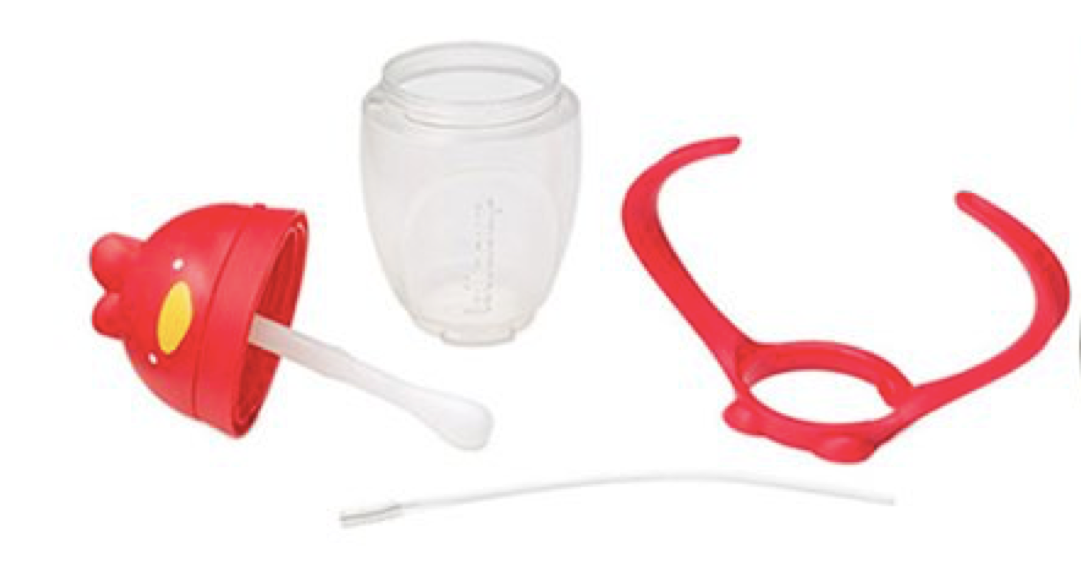
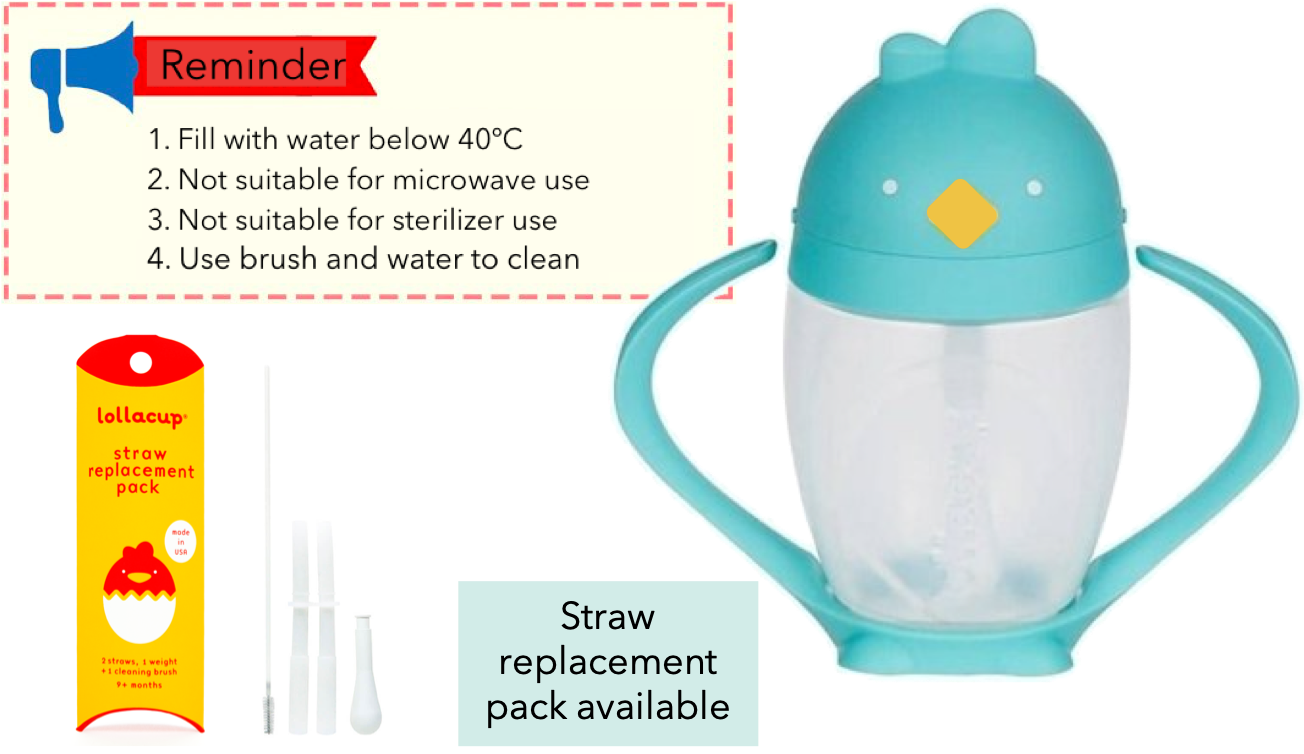
  • Weighted Straw: This is a key feature! A weighted end allows the straw to follow the liquid, so your child can drink from any angle without frustration.

  • Valve-Free Straw: While valves prevent spills, they can make it difficult for a new learner to get liquid out. A non-valved straw is often easier for babies to master.

  • Safety First Materials: Ensure the cup is made from FDA-approved materials and is explicitly free from BPA/BPS, PVC, and Phthalates.

  • Easy to Clean: Look for cups with minimal parts that are easy to assemble and disassemble. A cup that comes with its own straw-cleaning brush is a huge plus for hygiene.

  • Right Size: A cup that holds around 200-300 ml (7-10 oz) is typically a great starting size for toddlers.

  • Handles: Easy-to-grip handles help little hands hold the cup securely, promoting independence.

How to Teach Your Baby to Drink From a Straw

While some babies take to a straw instantly, others need a little practice. Try this gentle method:

  1. Dip the bottom of the straw into a cup with water or milk.

  2. Place your finger over the top end of the straw to trap the liquid inside.

  3. Bring the bottom of the straw to your baby's mouth and release your finger, letting a small amount of liquid flow in. This shows them that liquid comes from the straw.

  4. After a few tries, offer them the cup. They should instinctively begin to seal their lips and suck.

Be patient! While some little ones get the hang of it around 9-12 months, others might master the skill closer to 18 months. Every child learns at their own pace.

Ready to Make the Transition?

Choosing the right cup can make the transition from the bottle smoother for your baby and support their healthy oral development.

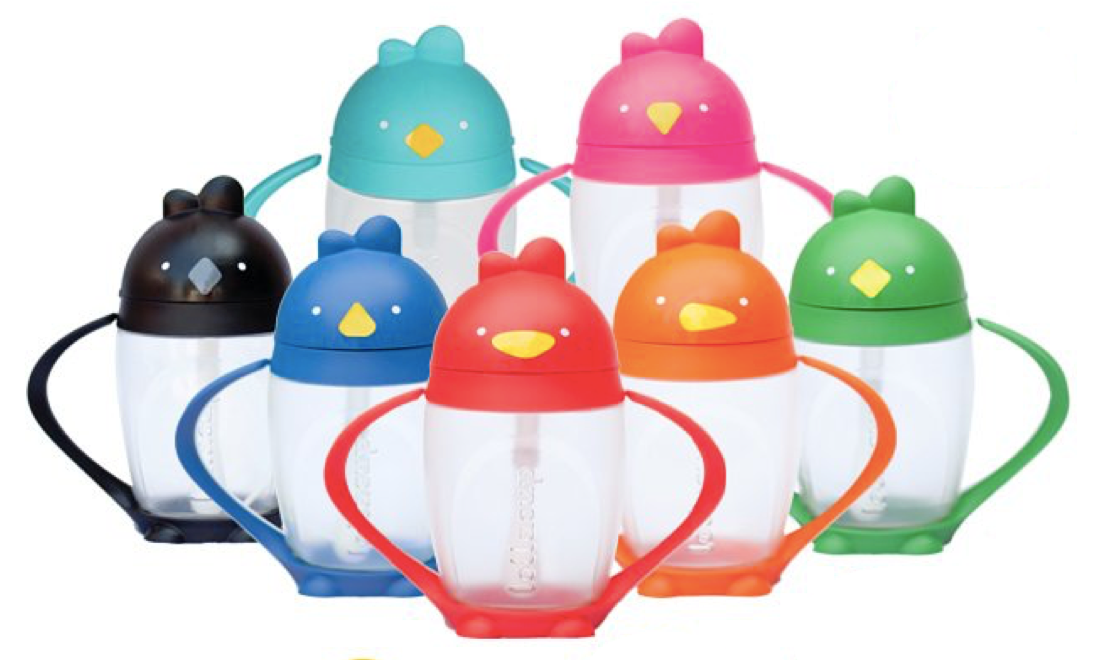
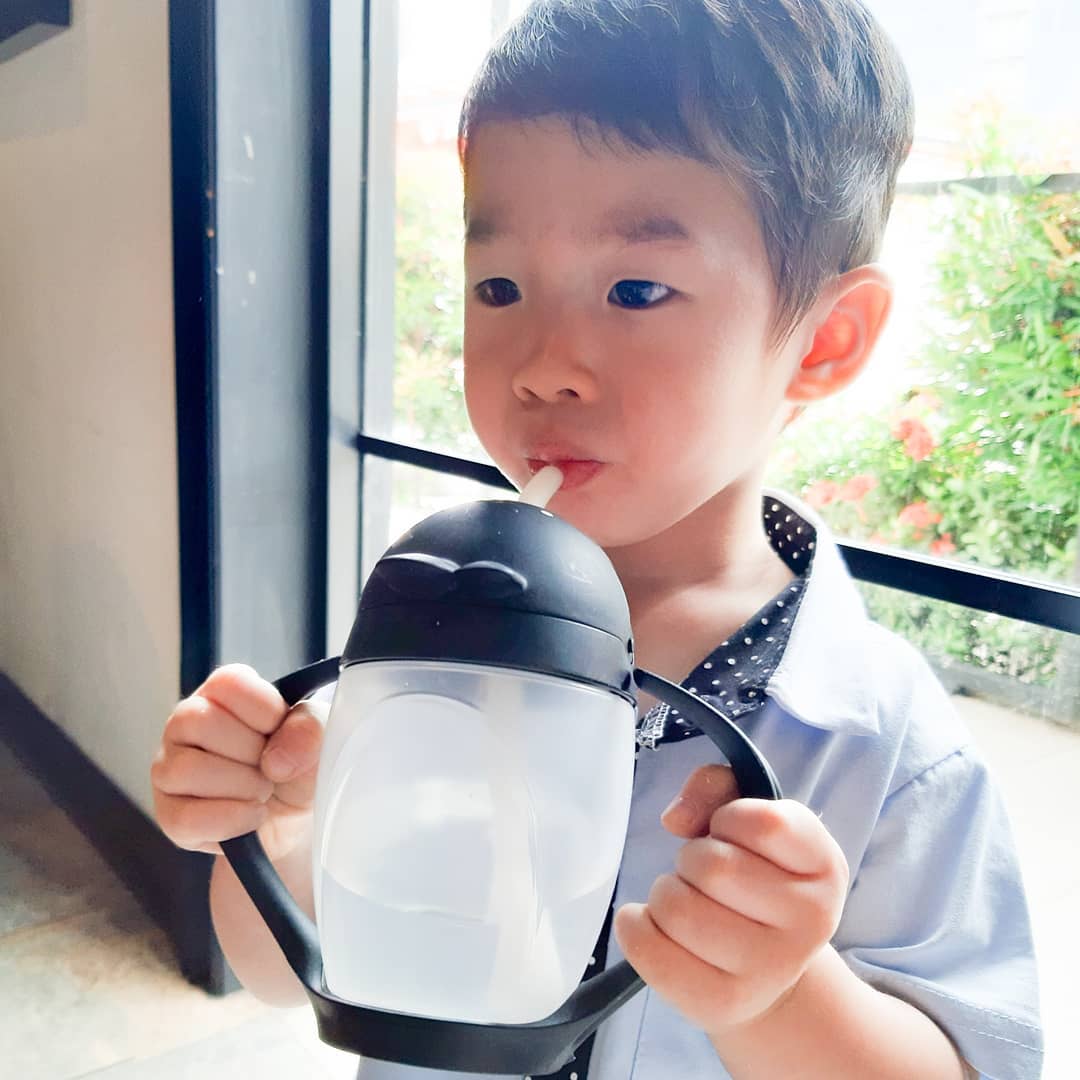
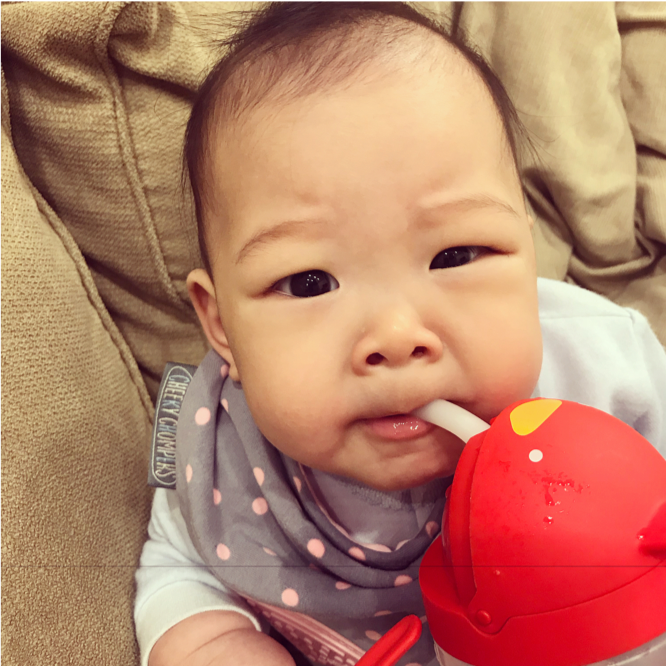
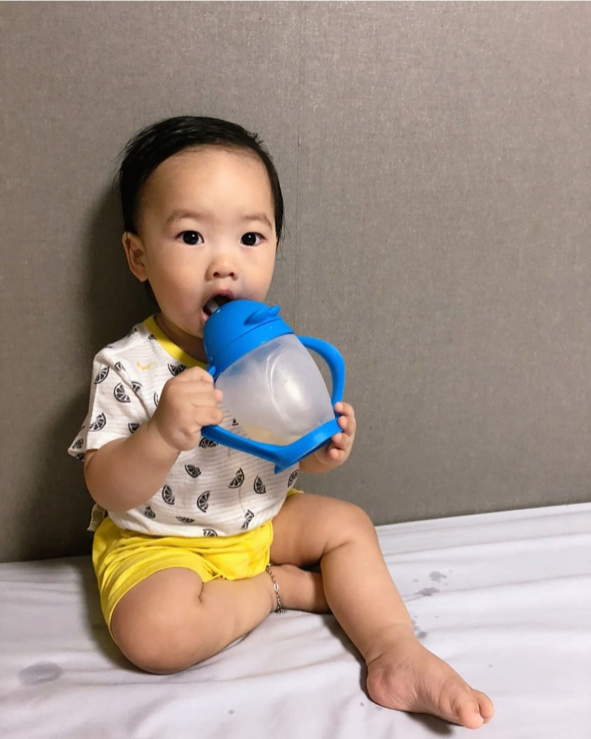
Hi Lollacup, the modern straw cup! Bye-bye to sippy cup!

The Ultimate Guide to Baby Product Distribution in Asia: Partnering with BabyLux

In the rapidly growing Asian market, finding a reliable and experienced partner to distribute your baby products is crucial for success. For retailers, sourcing high-quality, innovative, and safe products is key to winning the trust of discerning parents. That's where BabyLux comes in.

For over nine years, BabyLux has been the leading distributor of premium baby, toddler, and maternity products across Asia. We bridge the gap between exceptional international brands and the Asian market, ensuring that the finest products reach families who want nothing but the best.

Our Philosophy: Luxury and Love for Your Little One

At BabyLux, we believe that every baby deserves a touch of luxury. Our name itself stands for "Luxurious Baby," and this philosophy is at the core of everything we do. We meticulously select award-winning international brands from the USA, Canada, and Europe, bringing their exceptional products to the Asian market.

As parents ourselves, we understand the joys and challenges of raising a child. That's why we only distribute products that we would use with our own families. We are committed to making parenting a joyful and stylish experience.

Why Partner with BabyLux?

We are more than just a distributor; we are a dedicated partner in your success. Whether you are a brand owner looking to expand your reach or a retailer seeking the best products for your customers, BabyLux offers unparalleled support and expertise.

For Brand Owners: Your Gateway to the Asian Market

Extensive Sales Network
We provide access to hundreds of our sales channels across Asia, and this number is growing daily.

Local Expertise
We handle the complexities of trademarks, intellectual property rights, and customs issues, saving you time and resources.

International Sales Experience
We understand the cultural nuances of each Asian market, ensuring your brand resonates with local consumers.

Close Retailer Relationships
We have strong connections with local wholesalers, which reduces your management costs and streamlines the entire distribution process.

Valuable Market Insights
We provide crucial feedback from local wholesalers to help inform and refine your global business strategy.

For Local Distributors and Retailers: Your Source for the Best Products

Complete Marketing Support
We provide a comprehensive marketing database and localized campaigns exclusively for our local distributors.

Logistics and Business Advice
We share our extensive international business experience and offer the best logistics support to help you grow.

Flexible Ordering
We offer a uniquely flexible ordering process that sets us apart from other distributors, making it easier for you to manage inventory.

Shared Experience
We connect our network of distributors to share solutions and strategies for common challenges, fostering a supportive community.

Customer Referrals
We actively introduce potential local customers to our trusted local distributors to help drive your sales.

Keeping Up with Today's Parenting Trends

The world of parenting is always evolving, and so are we. We stay ahead of the curve to ensure our portfolio meets the demands of modern parents. Here are some of the key trends we are seeing:

  • Eco-Friendly and Sustainable Products: Today's parents are increasingly conscious of their environmental impact. We are proud to offer a growing selection of sustainable and non-toxic baby products.

  • Smart Baby Tech: From smart monitors to self-rocking bassinets, technology is making parenting easier and more connected. We are at the forefront of this trend, sourcing the latest in baby tech.

  • Minimalist and Aesthetic Designs: Modern parents are looking for baby products that are not only functional but also fit seamlessly into their stylish homes. We specialize in brands that combine beautiful design with exceptional quality.

Join the BabyLux Family

With offices in Hong Kong, China, Korea, Singapore, Malaysia, Japan, and Vietnam, we offer turnkey market access and deep local insights across all major online and offline channels.

We are committed to building fair, transparent, and long-term relationships with our partners. Our goal is to treat everyone with the same respect and care that we would want for ourselves.

Ready to grow your brand in Asia? Contact us today to learn more about a partnership.

Looking for the best baby products for your store? Browse our brands and see what parents are saying about them in our reviews.

 
We believe that “only parents can solve the needs of new parents”, which is why we choose these brands designed by new parents, and hoping to share with you.
— Wendy, Co-Founder of BabyLux
BabyLux - Luxury for your little one

BabyLux - Luxury for your little one