

The Great Play Shift: Why Modern Toys Are About Building Skills, Not Just Entertainment
/Take a look at the classic toybox of the past. It was often filled with colorful plastic objects that beeped, booped, and lit up. A character would sing a song at the press of a button. A toy car would race when you pulled it back. These were toys of entertainment, designed for a single purpose, a single outcome.
Today, a quiet but powerful revolution is happening in our living rooms and classrooms. The definition of a "good toy" has fundamentally changed.
Modern parents and educators now understand that the most valuable play happens not when a child is passively entertained, but when they are actively creating, problem-solving, and inventing. The best toys are no longer just objects; they are tools for thinking.
At BabyLux, we have been at the forefront of this evolution. After more than a decade of curating the best products for families, we have dedicated our expertise to championing this new generation of toys, play systems designed to build the essential skills our children will need to thrive in the future.
Here is what the great play shift looks like.
The Decline of the "Single-Purpose Toy"
The old model of toys was based on consumption. The toy performed, and the child watched. While fun for a moment, this passive play has a short lifespan because it has a low "play value." Once the single function is understood, the toy is no longer interesting.
The Rise of the "Play System"
The new model of toys is based on creation. These are not just toys; they are systems of components that offer infinite possibilities. They don't have a single outcome; they have a million potential outcomes, limited only by a child's imagination. This is where true learning and skill-building happen.
We see this new paradigm taking shape in three key areas:
1. The Engineering & Construction System
These toys teach children to think like engineers, building resilience, spatial reasoning, and real-world problem-solving skills.
For Grand-Scale Invention: The ultimate example is Makedo. It’s a toolset that gives children the power to transform discarded cardboard into anything they can imagine—a life-sized fort, a robot costume, a race car. It teaches resourcefulness and structural engineering on a scale that is immediate and tangible.
For Precision & Architectural Thinking: At the other end of the spectrum are systems built on a single, brilliant component. Plus-Plus uses one simple shape to create everything from complex 2D mosaics to intricate 3D models. Similarly, the flexible, magnetic pieces from Clixo merge the art of origami with the satisfaction of a construction toy, allowing for dynamic, bendable creations.

2. The Abstract & Open-Ended System
These toys are the antidote to a world that demands a single right answer. Their power lies in their simplicity and lack of a defined purpose, which forces a child to be purely creative.
The Masterclass in Open-Ended Play: The Swiss-designed toys from MOLUK are the quintessential example. Is the Bilibo a spinning seat, a helmet, a turtle shell, or a cradle for dolls? The answer is "yes." It becomes whatever the child needs it to be, fostering a level of imaginative, abstract thinking that is crucial for innovation.

3. The "Phygital" System: Merging Physical and Digital Play
Modern parents know that screens are a part of life. The challenge is not to ban them, but to transform them from passive entertainment into active learning tools. This is the world of "phygital" (physical + digital) play.
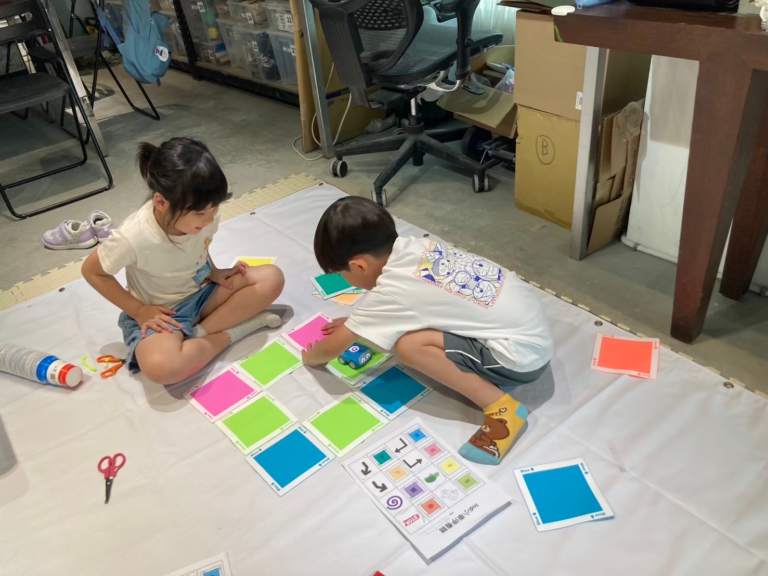
For Screen-Free Coding: Sphero indi is genius. It teaches the fundamentals of computational thinking—cause and effect, patterns, and problem-solving—using a fun race car and colored tiles, no screen required.
For Augmented Reality Learning: Brands like PlayShifu and Abacus Brands are leaders in using AR and VR to bring learning to life. A globe comes alive with animals and landmarks; a science kit lets you conduct explosive experiments in virtual reality. They turn a tablet into a window for exploring complex subjects in a tangible, exciting way.
An Investment in How They Think
Choosing a toy for your child is no longer just about what will make them smile for a minute. It's an investment in their future. By choosing toys that are systems and tools, you are giving them a playground for their mind. You are helping them build a foundation of creativity, critical thinking, and adaptability—the very skills they will use to build their own future.
At BabyLux, we are proud to be the expert curators of this new world of play.
Explore our collection of brands that are building the next generation of thinkers, creators, and innovators.