10 Best Experience Gifts for Kids (And Why They're Better Than Toys)
/As parents, we often default to giving toys as gifts. But in a world full of clutter, have you ever considered giving an experience instead? Experience gifts—from museum memberships to sporting passes—give your children more than just another object for their playroom. They create memories, build new skills, and provide fun for the entire family. It’s a win-win!
Here are 10 of our favorite experience gifts that will be cherished long after a toy has been forgotten.
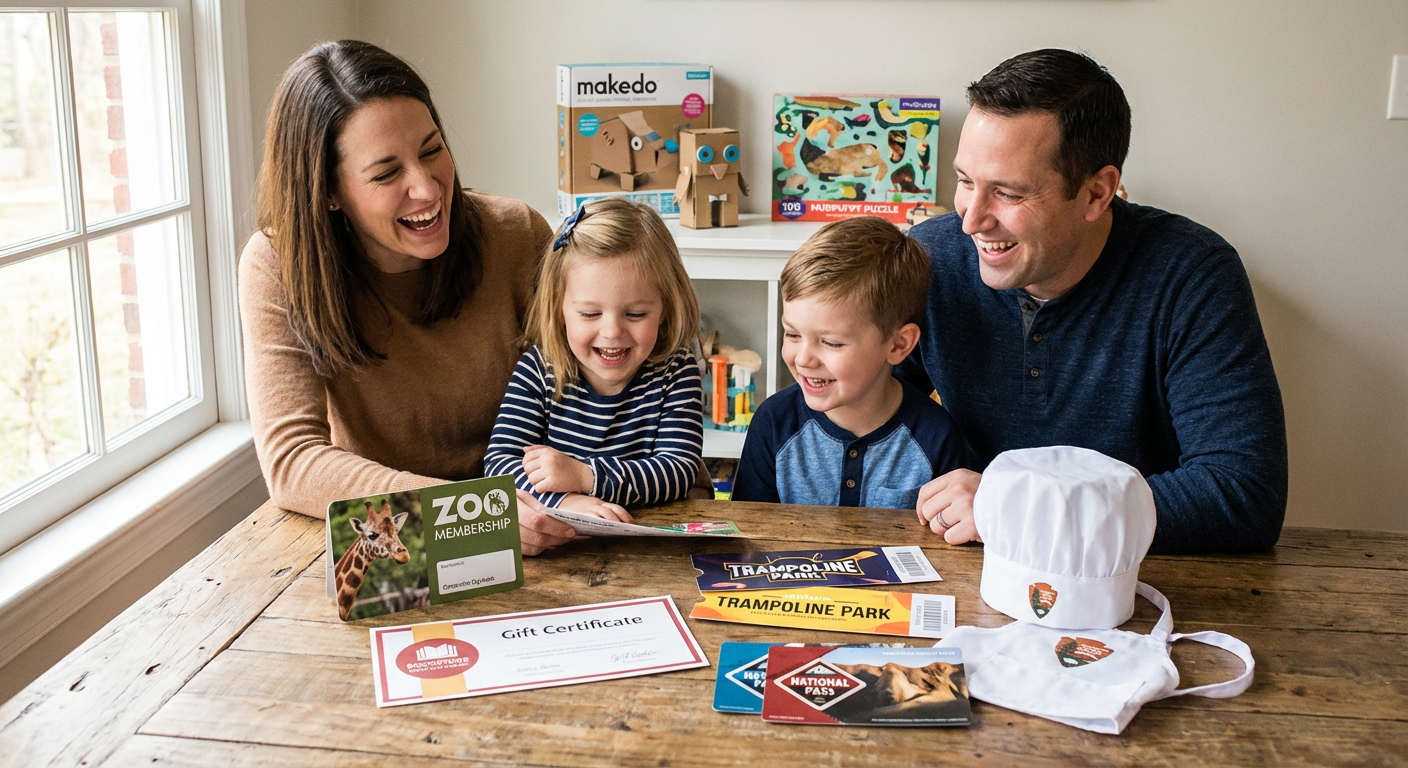
10 Awesome Experience Gifts for Kids
1. A Gift Card to a Family-Friendly Restaurant
Eating out becomes a special occasion. Giving a gift card to a fun, kid-friendly restaurant encourages a dedicated family meal where everyone can connect without the stress of cooking or cleaning up.
2. Trampoline Park Passes
We all know trampolining is fun, but it's also a fantastic physical outlet. As kids bounce, their bodies get a great workout, which increases energy levels and makes them feel more alert and happy! A pass to an indoor trampoline park is the perfect gift for a rainy day.
3. Zoo or Aquarium Membership
A membership often comes with unlimited express entry for a full year. It’s a gift that keeps on giving, allowing for spontaneous afternoon trips to see the animals and learn about the natural world.
4. A Trip to a Bookstore to Pick Out New Books
Reading with your child promotes brain development and imagination. Make it an event! A "gift certificate" for a special trip to a local bookstore lets your child be the decision-maker, empowering them to choose the books that spark their curiosity.
5. Local or National Park Passes
A park pass encourages a full year of outdoor adventures. Exploring nature has profound benefits for a child's well-being, and it provides a beautiful, screen-free backdrop for making family memories.
6. A "Ticket" to Visit Someone Special
The best gift of all can be time with loved ones. Create a special "plane ticket" or "train ticket" for a dedicated trip to visit Grandma, Grandpa, or a favorite aunt. These family trips create some of the most cherished memories of childhood.
7. An Art Museum Pass
Museums are a feast for the senses. Visiting a museum encourages children to ask questions, discover new subjects, and develop their own creative eye. Many museums also have dedicated children's areas with hands-on activities.
8. A Kids' Cooking Class
Cooking is a critical life skill, and it's also a fantastic developmental activity. A cooking class teaches kids about ingredients and nutrition, enhances their fine motor skills through mixing and measuring, and builds their confidence as they create something delicious.
9. Season Passes to a Local Attraction
Whether it's a theme park, a water park, or a local children's discovery center, a season pass turns a one-time treat into a recurring source of joy and excitement for the whole family.
10. Swim, Music, or Art Lessons
Lessons are a gift of skill and confidence. Whether it's learning to swim, play an instrument, or paint, lessons help children develop new talents, build muscle coordination, and learn valuable social skills in a group setting.
Bring the Experience Home: Gifts That Create Memories
Sometimes, the best experiences happen right in your living room. The right "toy" can be a tool that creates an unforgettable family experience.
For the Family of Builders: Give the gift of large-scale creation with Makedo. This award-winning toolset empowers kids to turn simple cardboard boxes into life-sized forts, robots, and cars, creating an engineering adventure for the whole family.
For the Future Scientist: Bring the museum home with an immersive science kit from Abacus Brands. Their AR/VR-enabled kits let kids explore chemistry, biology, and more in a tangible, exciting way that feels like magic.
For the Digital Explorer: Transform screen time into a learning experience with PlayShifu. Their "phygital" (physical + digital) games use augmented reality to teach everything from geography to problem-solving. For screen-free learning, Sphero indi teaches the fundamentals of coding through a fun, hands-on race car, no screen required.
For Quiet Connection: The shared experience of completing a beautiful puzzle together is a quiet, powerful way to bond. Mudpuppy creates stunning, museum-quality puzzles with gorgeous artwork that the whole family can enjoy.