Does Your Baby Need a Pacifier? The Pros, Cons, and How to Choose
/Every parent has a unique perspective on pacifiers. Some see them as an essential tool for soothing a fussy baby, while others worry about potential issues like "nipple confusion," a drop in milk supply, or long-term dental problems. So, what's the real story?
Does a Baby Truly Need a Pacifier?
The truth is, it depends on the baby. Some infants are naturally able to soothe themselves, often by sucking on their thumbs or fingers—a habit that can start even before they're born. For many others, the strong, instinctual sucking reflex finds comfort and calm in a pacifier.
The American Academy of Pediatrics offers guidance for breastfeeding mothers. To avoid any potential nipple confusion, they suggest waiting until your baby is breastfeeding well and your milk supply is established, which is often around your baby’s one-month birthday. If nursing is going well and your baby is gaining weight on a regular schedule, you can give them a pacifier after feedings to satisfy their need to suck without interfering with nourishment.
The Surprising Benefits of Using a Pacifier
While soothing a fussy baby is the most obvious benefit, it's not the only one.
Reduced Risk of SIDS: Research by the American Academy of Pediatrics has shown that giving infants a pacifier at nighttime and for naps can help reduce the risk of Sudden Infant Death Syndrome (SIDS). The protective effect is still present even if the baby spits the pacifier out after falling asleep.
A Habit That's Easier to Break: A pacifier habit is often easier to manage and eventually break than a thumb-sucking habit. After all, you can't misplace a thumb, but you can decide when a pacifier is no longer needed.
Parental Peace of Mind: As a new parent, comforting your baby is a top priority. A pacifier can be an invaluable tool for calming your little one, which in turn helps calm you.
The only time pacifier use might be restricted is if a child is particularly prone to ear infections, as constant sucking can sometimes interfere with ear tube drainage.
How to Choose the Best Pacifier for Your Baby
When it's time to choose a pacifier, focus on these key features rather than just a brand name.
1. Construction and Material
Look for pacifiers with a one-piece construction, as these are the safest. There are no separate parts that could break off and become a choking hazard. The best material is 100% medical-grade or food-grade silicone that is soft, durable, and free of BPA and other harmful chemicals.
2. Nipple Shape
You will generally find two types: a classic, rounded nipple and an orthodontic nipple. Orthodontic pacifiers are specially shaped—flattened on the bottom and rounded at the top—to support the natural development of your baby's palate and jaw.
3. Shield Design
The shield is the part that rests against your baby’s face. It should be large enough that your baby cannot fit the entire pacifier in their mouth. Crucially, it must have ventilation holes to allow for air circulation. Some modern designs are even handle-free to prevent a baby from getting distracted.
4. Compatibility with Accessories
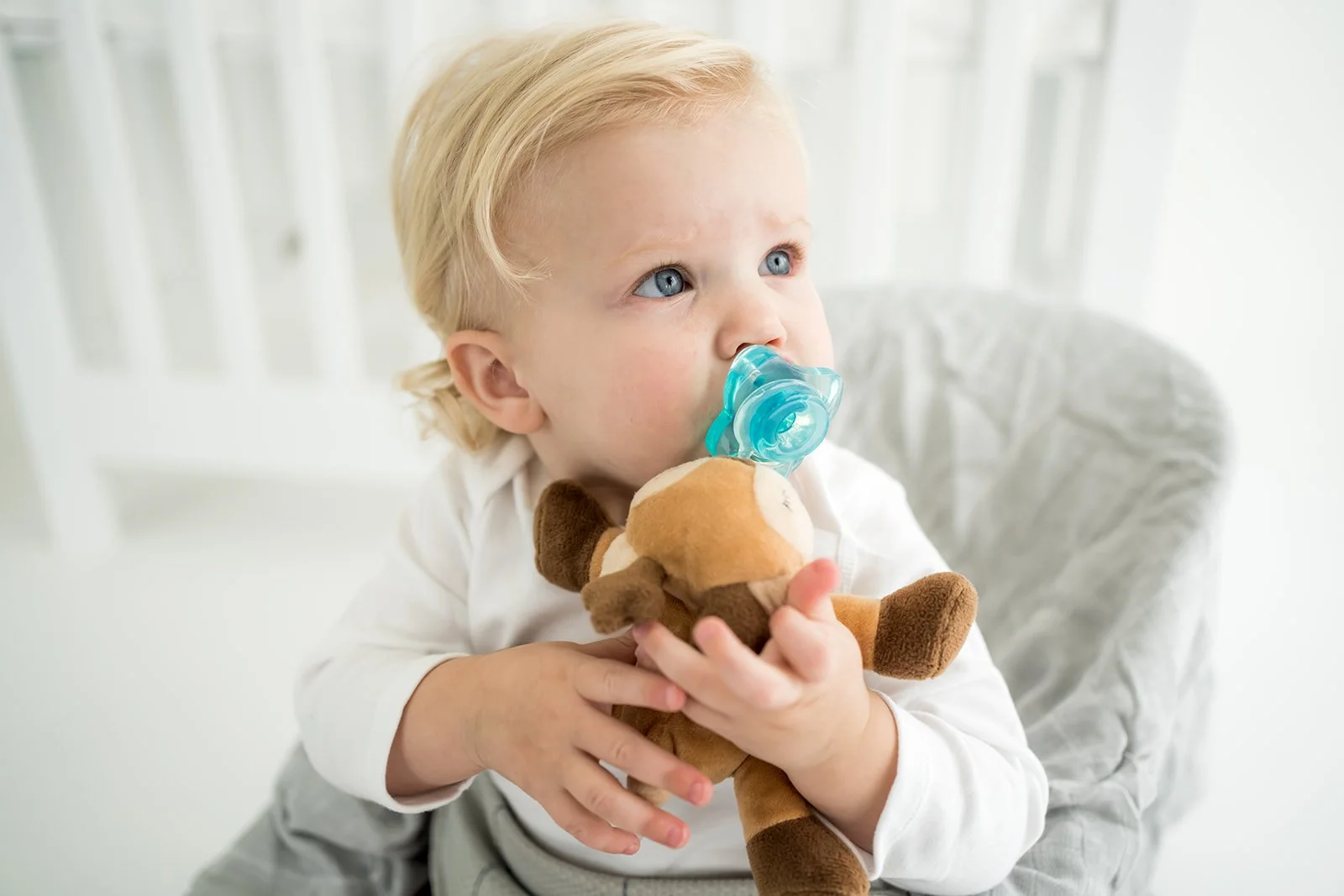
For convenience, consider a pacifier that is compatible with a holder or clip. Paci-plushies (a pacifier attached to a small stuffed animal) can make the pacifier easier for a baby to find and hold on their own.
When Is It Time to Say Goodbye to the Binky?
To avoid potential dental effects, it's best to start phasing out the pacifier once your child is around two or three years old. While significant changes to the jawbone typically don't begin until age four, it's always a good idea to discuss your child's pacifier use with your dentist during regular check-ups.